AA Grapevine
- 4.4
- Rating
- 10.00K
- Installs
- Free
- Price

 Analysis by App-foxy
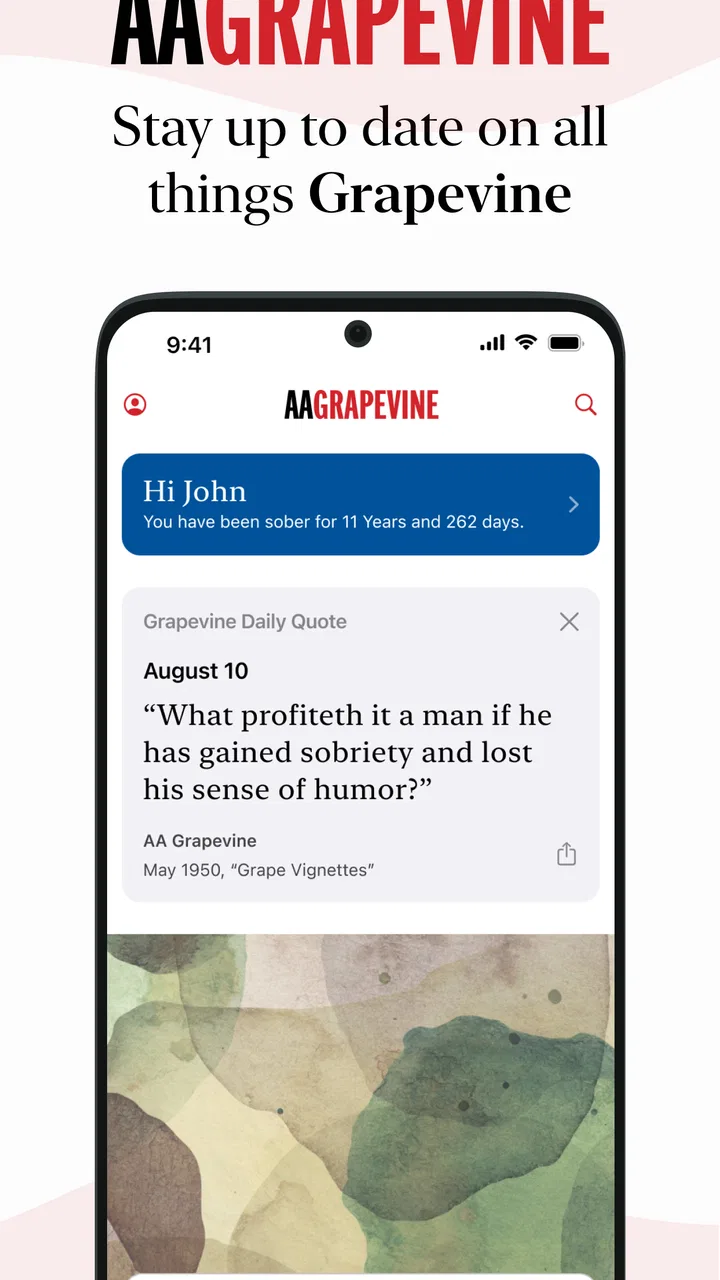
I found AA Grapevine most useful when I wanted a focused way to keep Grapevine-related material close at hand rather than search through a general news reader or a web browser. It belongs to the News & Magazines category, is free to install, and is made by Grapevine and La Viña Apps. The experience is clearly aimed at people who already have an interest in Alcoholics Anonymous and want a mobile doorway into its Grapevine world.
That focus is both the app’s main strength and its main boundary. I would not install it expecting a broad newspaper replacement, a general magazine kiosk, or a social network for every kind of recovery conversation. I would install it because the subject matter matters to me and because a dedicated app can make that material easier to reach during ordinary moments: waiting for an appointment, taking a quiet break, or looking for something relevant while away from a computer.
How AA Grapevine feels when the connection matters
The first thing I noticed is that the usefulness of a content-focused app like this depends heavily on the quality of the moment in which I open it. With a reliable connection, browsing feels more natural than starting from a search engine. I can go directly to the Grapevine environment instead of sorting through unrelated results, advertisements, or pages designed primarily for a desktop screen.
You May Also Like

 AccuWeather: Weather Radar
AccuWeather Review: A Quick, Clear Forecast for Everyday Decisions
For everyday plans, the best forecast is the one you can understand quickly. AccuWeather makes rain timing, radar, and local conditions easy to act on, with a few trade-offs.

 Hill Climb Racing
Why Hill Climb Racing Still Turns Crashes Into One More Run
A tiny car, a bumpy hill and one more upgrade: Hill Climb Racing keeps resurfacing because its simple chaos makes every near-miss feel personal.

 AliExpress - Shopping App
AliExpress Makes Global Shopping Feel Personal, but Shoppers Bear the Risk
AliExpress turns a global marketplace into a pocket-sized discovery engine. Its reach is useful, its shopping loop compelling, and its trade-offs easy to miss.

 Lords Mobile: Kingdom Wars
Lords Mobile Is a Kingdom-Building Routine, Not a Quick Match
A case-by-case verdict on the building, battles, device demands, and social commitments that make Lords Mobile rewarding for some players and exhausting for others.

 PDF Scanner app - TapScanner
TapScanner Makes Paperwork Easier to Capture, Check, and Share
TapScanner makes scanning with a phone feel less like a rescue operation and more like a dependable step in getting work done. Its capture tools are useful, though not flawless.

 Block Blast!
 Shows How Much a Puzzle Game Can Leave Out
A quiet grid game shows why puzzle players increasingly value instant clarity, repeatable skill and low-pressure play—and where the genre still needs to catch up.
More From Our News Desk
View All News


That directness is valuable for readers who already know what they are looking for. Someone checking in during a lunch break may want a short reading session, while another person may be exploring Grapevine material more deliberately. In both cases, the app’s identity is clearer than that of a general news application. It does not need to compete for attention with politics, sports, weather, and entertainment before I reach the subject I opened it for.
At the same time, I would keep my expectations realistic whenever the network is weak. A mobile app that presents current or remotely delivered material can feel quick one minute and hesitant the next, depending on the connection. I did not treat a delayed screen or an incomplete loading moment as evidence that the content itself was missing. My practical advice is to give each screen a moment before tapping repeatedly, especially when using crowded public Wi-Fi or a mobile signal that keeps changing.
This matters because repeated taps can make a connection problem feel like an app problem. If a page does not respond immediately, I first check whether other apps are also struggling, then retry once rather than opening several copies of the same action. That small habit makes the experience less frustrating and avoids turning a temporary network pause into a confusing series of duplicate requests.
For a reader who wants instant access in every situation, this dependence may be the biggest consideration. I would not promise myself that every part of the experience will behave identically in a basement, on a train, or in an area with poor reception. If I know I will be disconnected, I plan my reading around what is already available on the device instead of assuming that a fresh section will appear without a connection.
A better fit for short, intentional visits
AA Grapevine works best for me when I approach it with a clear purpose. I might open it to read for a few minutes, revisit a topic that feels relevant, or make it part of a regular personal routine. The app’s dedicated subject makes those visits feel more intentional than scrolling through a mixed feed where useful material is surrounded by distractions.
One non-obvious advantage of that focus is emotional pacing. A general news app often encourages rapid switching between headlines, but a specialized recovery publication can invite a slower kind of attention. I found it helpful to decide before opening the app whether I wanted a quick check or a longer reading session. That simple choice prevented me from treating the app like an endless feed and made the material easier to absorb.
There is also a trade-off. People who prefer a single app for every source may find the focused scope restrictive. If your daily reading includes several unrelated magazines and newspapers, a broad reader may be more convenient. AA Grapevine is better when relevance matters more than variety.
Using it in real mobile situations
The most believable everyday scenario is a short pause that does not justify opening a laptop. I can imagine sitting in a waiting room, checking the phone, and choosing a dedicated Grapevine reading experience instead of drifting into random social media. The small screen is not ideal for every long session, but it is convenient for a focused visit when I want the material with me rather than saved for later.
I would also use it during travel planning, but with caution. Before leaving a dependable connection, I would open the sections I expect to read and make sure the app has finished displaying what I need. I would not assume that a page I have never opened will be available in a tunnel, on an airplane, or in a remote location. That is a sensible workflow for any connection-dependent reading tool, and it is especially useful here because the app’s value comes from reaching specific material at the right moment.
Another practical situation is a quiet evening at home. On a larger screen, a website may be more comfortable for extended reading, but the phone is less formal and easier to pick up. I like that distinction: the app is not necessarily a replacement for every other format, but it can be the most convenient format when I want a private, compact reading session.
People with accessibility needs should judge the experience on their own device before committing to a regular routine. Screen size, text scaling, contrast preferences, and the behavior of the operating system’s accessibility tools can change how comfortable a reading app feels. I would test a typical article or content screen, not just the opening page, because the real question is whether sustained reading remains comfortable.
What happens when a page does not load
Connectivity problems are easier to handle when I use a simple recovery sequence. I stop tapping, wait briefly, and try the same action again. If that does not help, I move from unstable Wi-Fi to mobile data or the reverse, provided my plan allows it. I also close other heavy network activity when I need the app to respond quickly.
Restarting the app is a reasonable next step, but I would use it after checking the connection rather than as an automatic first reaction. A restart can clear a temporary display problem, yet it cannot create a network where none exists. If the app opens normally but a particular piece of content remains unavailable, I treat that as a signal to try later instead of repeatedly refreshing the same screen.
This recovery approach is important for a reading app because frustration can interrupt the purpose of the visit. I would rather leave the app, reconnect somewhere more stable, and return with a clear head than spend several minutes guessing whether a button worked. The app benefits from calm, deliberate use more than frantic troubleshooting.
When I return after an interruption, I also check where I was rather than assuming the app will restore every detail of my previous session. I keep a mental note of the section or topic I was reading, and if something is especially important to me, I record that outside the app in a private note. This is not a criticism of AA Grapevine specifically; it is a sensible safeguard whenever reading depends on a live connection and a short mobile session.
The same thinking applies to updates. The current version is 1.23.0, and the app requires Android 9 or later. I would check compatibility before recommending it to someone using an older phone, because a free app is not useful if the device cannot run it comfortably. Keeping the operating system and app current can also reduce avoidable compatibility friction, although it does not guarantee a perfect experience on every network.
Keeping mobile data under control
For data-conscious readers, the safest habit is to avoid treating every visit as an unlimited browsing session. I use Wi-Fi for longer exploration whenever possible and reserve mobile data for the moments when I genuinely want to read. That approach is particularly sensible if I am traveling or using a plan with a tight allowance.
I also avoid leaving the app open while doing something else. A focused reading session is easier to manage than an app sitting in the background while I switch between several network-heavy activities. If I am finished, I leave it rather than assuming that an open screen is harmless. I would not invent a special data-saving mode or promise particular background behavior without seeing it clearly in the app, so my advice stays practical: control the circumstances in which you use it.
There is another cost-related detail worth noticing. The app itself is free, but in-app purchases range from $2.99 to $29.99 per item. That means I can try the basic experience without paying at installation, while still needing to pay attention before confirming any optional purchase. I would use the free entry point first, understand what I can access comfortably, and decide afterward whether a paid item fits my reading habits.
This is also where AA Grapevine differs from a completely open general news reader. A broad app may gather free headlines from many sources, but it may not offer the same focused relationship with Grapevine material. Here, the question is less “Can I get as much news as possible?” and more “Is this particular publication and recovery-oriented subject worth making room for?” For the right reader, that is a fair trade.
Who should choose it, and who should skip it
I would recommend AA Grapevine to people who already value Grapevine content, want a dedicated mobile option, and prefer a quieter, more relevant reading destination than a mixed news feed. It is also a sensible choice for someone who regularly moves between home, work, meetings, and travel and wants the subject close without carrying a printed publication or opening a desktop browser.
I would be more cautious about recommending it to someone who wants breaking news across many subjects. The app’s News & Magazines classification should not be mistaken for a full replacement for a general news service. Its strength is specialization, not breadth. Likewise, readers who dislike any network-dependent mobile reading should test it in the places where they expect to use it before making it part of a daily routine.
The age rating is Everyone, which makes the app broadly approachable from a store-rating perspective. That does not mean every reader will connect with its subject matter or tone. I would choose it based on personal interest in AA Grapevine, not simply because the age label is unrestricted.
The developer, Grapevine and La Viña Apps, has kept the product identity closely tied to the publication it represents. I appreciate that clarity because it reduces the guesswork involved in deciding whether the app belongs on my phone. Its audience is not hidden behind a vague promise; the name and purpose point in the same direction.
How it compares with the usual alternatives
The most obvious alternative is opening Grapevine through a mobile browser. A browser can be better when I want to move between several websites, copy a page address, or read on a larger screen. It may also be preferable for someone who does not want another app installed. The dedicated app wins when I want a more direct starting point and do not want to rebuild the same search path each time.
A general news aggregator offers more variety, faster topic switching, and a single place for unrelated publications. Its weakness is that Grapevine material becomes one interest among many. I may spend more time filtering than reading. AA Grapevine makes the opposite choice: less variety, more subject relevance.
Printed reading has its own advantages. It does not depend on a phone battery, a signal, or a bright screen, and some people find paper easier for sustained attention. The app is more convenient when I am already carrying my phone and want immediate access. Neither format completely replaces the other, and I would choose based on the setting rather than loyalty to one medium.
A social platform may provide conversation and rapid reactions, but it can also bring noise, interruptions, and unpredictable recommendations. I see AA Grapevine as a calmer complement rather than a substitute for every form of community interaction. If my priority is focused publication content, the app is the better fit; if my priority is live discussion, another tool may serve me better.
My final connectivity verdict
AA Grapevine earns its place on my phone because it turns a specific reading interest into a more convenient mobile visit. Its free installation, focused identity, and approachable Everyone rating make it easy to try, while the average rating of 4.4 from around 145 ratings suggests that the existing audience has generally responded well. It has also reached over 10 thousand installs, enough to show that it is serving a real mobile readership without making it seem like a universal news platform.
My recommendation comes with one condition: use it with a realistic understanding of connectivity. I would open it when I have a dependable signal, plan longer sessions around Wi-Fi, and avoid assuming that every page will be ready during a completely disconnected journey. Those habits do not diminish the app; they make its strengths easier to enjoy.
The app is not the right choice for someone seeking a huge multi-topic news feed, a guaranteed offline library, or a desktop-sized reading environment on every visit. For readers who want Grapevine material in a dedicated, portable form, however, it is a sensible and focused option. If the subject is already meaningful to you, the app’s convenience is more important than its narrow scope.
I would start with a few ordinary sessions: one at home on stable Wi-Fi, one during a short mobile break, and one in the place where I expect to use it most. That quick test reveals whether the screen, connection behavior, and reading rhythm suit me. After that, the decision is straightforward: keep it as a focused companion for Grapevine reading, or choose the browser, print, or a broader news app if those better match the way I consume information.
FAQs for AA Grapevine
01What is AA Grapevine?
AA Grapevine is the official international magazine of Alcoholics Anonymous, featuring personal stories, reflections, and practical experiences from people in recovery. The app provides access to the magazine’s content in a convenient digital format, along with selected books, pamphlets, and other recovery-focused resources. It is designed for anyone interested in learning more about the AA experience.
02Is AA Grapevine suitable for people who are new to Alcoholics Anonymous?
Yes. AA Grapevine can be useful for newcomers as well as long-time members. Its articles explain how different people approach sobriety, meetings, the Twelve Steps, sponsorship, and everyday challenges in recovery. However, the app is not a replacement for professional treatment, emergency assistance, or personal support. Newcomers may find it most helpful when used alongside local meetings and trusted recovery resources.
03Does the AA Grapevine app require a subscription or payment?
Access to AA Grapevine content may depend on the specific issue, publication, or resource you choose. Some material can be available for free, while digital magazine issues, books, subscriptions, or other products may require payment. Before downloading or purchasing anything, review the current pricing, subscription terms, and renewal information shown in the app store or within the application.
04Can I read AA Grapevine content offline?
Offline reading depends on the particular version of the app and the content you have accessed or purchased. Many digital reading applications allow users to download issues or publications for later use, which can be convenient when traveling or when an internet connection is unavailable. It is worth opening the app’s settings and testing downloaded content before relying on it offline.
05Does AA Grapevine provide direct help for alcohol-related emergencies?
AA Grapevine is primarily a reading and recovery-information resource, not an emergency service or medical treatment platform. It may help users find stories and information connected with Alcoholics Anonymous, but it does not replace a doctor, counselor, detox program, or crisis service. If someone is in immediate danger, experiencing severe withdrawal, or at risk of harming themselves, contact local emergency services or a qualified professional immediately.
Pros
- Offers practical recovery resources for people affected by alcoholism.
- Includes stories and perspectives from the wider AA community.
- Provides access to useful sobriety-related articles and publications.
- Helpful for newcomers seeking encouragement and shared experiences.
- Content can support reflection between meetings or counseling sessions.
Cons
- Some content may feel dated or less relevant to younger users.
- Not a replacement for professional addiction treatment or emergency help.
- The amount of reading can feel overwhelming for first-time visitors.
- Limited interactive features compared with modern recovery apps.
- Information may reflect AA’s approach and not suit every recovery path.

AA Grapevine
Gallery